





In 2012, the Royal Institute of Architecture in England (RIBA) said that the levels of environmental requirements in construction projects has been increasing gradually since the early 1990s. Through their report, RIBA also stated that sustainable development is associated with concerns about the endurance of natural system to challenges human beings are facing.
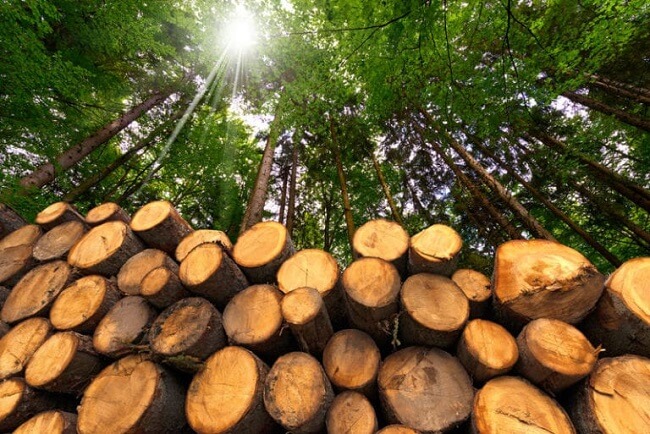
One of points which is worth mentioning in sustainable conservation is the importance of using timber from sustainable forest sources. According to British Forestry Commission, deforestation is the second largest source of emissions which leads to greenhouse in the world. In order to minimize negative impacts on the environment, architects, architects for landscape design, developers and contractors are encouraged to discover raw materials from forests under sustainable management. In these trees when large trees are cut down, seedlings will be newly planted.
There are currently over 50 certification programs focusing on different types of forests worldwide. 2 certificates with much attention are PEFC standard and FSC standard. So, what are differences among two certificates and why are there so many types of certificates working together?
Details of FSC and PEFC:
A: FSC standard:
Forest Stewardship Council TM (Forest Stewardship Council) is a non-governmental organization established in 1993 that brings together environmental non-governmental organizations, timber trade organizations, foresters, and indigenous peoples and Certification Units of 25 representative countries. It is considered as the only globally recognized organization for developing forest certification standards. FSC’s development is based on the following two solutions:
Forest management certification (FSC-FM), for companies in charge of managing natural forests or plantations as well as supply chain companies;
FSC / COC chain of custody certification, for companies using forest products (Ex. Furniture manufacturers, publishers, paper mills and all products) from wood …) to certify origins of wood.
B: PEFC Standard:
The Programme for the Endorsement of Forest Certification (PEFC) is a non-profit organization established in 1999 in Europe (in France) with activities to promote sustainable forest management through independent certification by third party.
PEFC works throughout product supply chain to promote good practices in forest management and to ensure that timber and forest products are produced and adhere to highest ecological, social and ethical standards. Thanks to eco-labels, customers and consumers can identify sustainable forest products.
PEFC is a sponsoring organization. It works by supporting national forest certification system through a multi-stakeholder evaluation process that prioritizes local suitability and conditions.
PEFC Forest Management Standard is divided into 2 types of specific certificates:
- PEFC-FM (Forest Management Certification): Forest Management Certificate. PEFC-FM Certificate only for afforestation and exploitation units.
- PEFC- CoC (Chain of Custody Certification): Certification of Chain of Custody Products. PEFC – CoC Certificate is for companies processing forest products. Certification of Management Systems for units that produce, process and trade forest products.
Two different (but also the same) ways to achieve the same result: Sustainable Forestry. But what are differences among these two non-profit organizations?
Some differences among FSC and PEFC.
1. “Up to down” vs. “Down to up”
FSC is an international standard applied in countries as an independent coordinating body, ensuring that forestry is implemented according to a certain standard. -> “top-down” approach PEFC operates in more than 30 countries and conducts an evaluation of independent forest management plans through international criteria for sustainable forestry. -> “bottom up” approach.
2. Scope
- FSC has 187 million hectares of forest (30,000 certificates)
- PEFC has 260 million hectares of forest (178,000 certificates)
- Purpose
- FSC was established to prevent illegal consumption of timber and focus more on environmental aspects.
- PEFC was basically established from FSC to facilitate sustainable forestry certificate but modified to specifically apply to small forest areas and forest owners.
4. Types of certificates – Level of commitment.
- FSC: Forest management, custody and timber chains under control.
- PEFC: Forest management, custody and timber chains under control.
5. Certificate
- FSC is the second certification party; certification organization.
- PEFC is the third certification party; use certified organizations.
Both of these certifications add value to product packaging, which show that products from sustainable sources, more importantly, they are not illegal wood. You can read more about benefits at Stora Enso’s article.
Some more detais of two certificates.
· Forest Stewardship Council (FSC) and Programme for the Endorsement of Forest Certification (PEFC)
FSC is a global certification system that allows individuals to identify and purchase timber from well-managed forests. The agency establishes 10 responsible forest management principles that the signer and owner of the forest must comply. As a benchmark, any FSC standard must be “understood” at a national level to be applicable in its own local forests.
Similarly, PEFC is a dedicated internationally organization for promoting sustainable forest management (SFM) through independent certification of third party. However, PEFC is not an agency that set standards but plays as a plan for mutual recognition. This organization not only focuses on code of SFM’s ethics, but also includes the processing of wood, which creates a stronger impact on the supply chain than FSC.
Both organizations are committed to one goal; however, the main difference among two is their origin. Originally, FSC was developed for tropical environments and is not suitable for forest types in Europe and North America. This led to the appearance of PEFC in the late 1990s to facilitate SFM’s implementation in Europe. Currently, PEFC accounts for more than 264 million hectares of certified forests and its certification system is present in more than 30 countries and territories around the world. Meanwhile, FSC has certified forests in 80 countries with 7% of world’s forest areas (180 million hectares) certified by FSC. Data collected by GFK in 2014 shows that 50% of the British recognize FSC logo.
· Two types of certification simultaneously operate.
To meet increasing number of environmental requirements for construction bidding packages, developers and contractors have developed specific policies for timber to ensure that stakeholders in project will work with timber whose origins are sustainable. However, that having a wood certificate is compulsory for a company will raise potential issues. Although FSC and PEFC are not much different, some customers still specify in their contract that any timber used in the project must have FSC certificate. This can lead to a loss for subcontractors with PEFC certified timber products because each project participant will have a contract prohibiting the use of different wood products.
In some circumstances, the lack of understanding of differences between FSC and PEFC certificates may lead architects to look for FSC certified products but not desirable characteristics to fit their designs. For illustration, Terrafina laminate flooring comes from woods that are sustainably managed and PEFC certified but does not comply with the contract because it required the use of FSC recognized products.
Experts have recently seen that many companies lost potential contracts with suppliers and contractors because of legal provisions in terms of timber certification. Despite the fact that both PEFC and FSC are quite prestigious and not much different even the UK government claims that they both meet standards for responsible timber, however many people are still choosing only FSC-labeled timber.
KNA is in association with TUV Austria Hellas for auditing and issuing FSC COC Certificate https://www.knacert.com.vn/ For detail of FSC, please visit homepage: https://tuvaustriahellas.gr/tuv-austria-hellas-became-accredited-certification-body-for-fsc-chain-of-custody-certification-for-14-countries/?lang=en
- Information for PEFC pre-audit information: KNA Certification Co., Ltd
- Main headquarter: 11th floor, Ladeco Building, 266 Doi Can Street, Ba Dinh District, Ha Noi.
- Branch: 7nd floor, Thuy Loi 4 Building, 205 A Nguyen Xi Street, Ward 26, Binh Thanh District, Ho Chi Minh City.
- Tell: 093.2211.786 – 02438.268.222
- Email: salesmanager@knacert.com Website: www.knacert.com.vn.
Q&A
0 Comment